
1. Executive Summary
This report presents a comprehensive case study of the rehabilitation project of the Dhamar Central Wastewater Treatment Plant (WWTP) in Dhamar Governorate, Yemen. Rwad Construction for Trading & Contracting executed the project on behalf of UNICEF, in close coordination with the Dhamar Local Water and Sanitation Corporation (LWSC), with a total contract value of USD M1.7 over an intensive six-month period.
Before the intervention, the 30-year-old WWTP suffered from a complete shutdown of Basin No. 6 (dimensions 380×84×3 m). This led to untreated sewage seepage into adjacent land and groundwater aquifers, dropping overall treatment efficiency to a failing 60% and triggering critically high pollution indicators (influent BOD = 2040 mg/L, COD = 2720 mg/L).
"Rwad Construction implemented integrated engineering solutions: removing approximately 23,520 m³ of sludge, installing a multi-layer lining system (base coarse, PVC geomembrane, and reinforced concrete), and expanding key hydraulic interfaces, successfully restoring treatment efficiency to over 90%."
2. Pre-Project Status & Critical Need
2.1 Overview of Dhamar Governorate
Dhamar Governorate is located approximately 100 km south of Sana'a. Agriculture is the main economic driver, ranking fifth nationally in crop output. Safeguarding the arable soil and water table is vital to prevent regional crop and food contamination.
2.2 Baseline Structural Problems of Basin No. 6
Constructed 30 years ago, Dhamar WWTP utilizes aerobic and anaerobic ponds. Basin No. 6 had been entirely out of service due to structural issues:
Unlined Earth Floor
Caused persistent seepage of raw sewage directly into the local drinking water aquifer.
Cracked Wall Foundations
Porous stone masonry walls suffered structural integrity failure, causing inter-basin leakage.
Sludge Accumulation
Deep layers of packed sludge (80-100 cm thick) restricted the basin's hydraulic capacity.
Epidemic Outbreak Risks
High cholera and gastroenteritis incidence among farming communities downstream due to contaminated irrigation.
3. Scope of Work & Project Challenges
The contract awarded to Rwad Construction required executing precise engineering and civil works in accordance with global humanitarian and structural standards:
Site Clearing & Excavation
Safely cleaning the basin's floor of heavy organic sludge and transporting approximately 23,520 m³ of sediments to safe disposal points.
Impermeable Multi-Layer Lining
Compacting a 60 cm base coarse (17,575 m³), laying a 500-micron PVC geomembrane (31,811 m²), and casting a 15 cm thick reinforced concrete floor slab (4,394 m³). Also executed wall plastering (4,687 m²), protective coating (34,087 m²), and expansion joints (12,250 linear meters).
Mechanical Works & Screen Installation
Overhauling 6 penstock valves, replacing 6 UPVC connection pipes (500 mm dia.), installing 12 ductile iron manhole covers, and adding two stainless steel 316L screens (coarse 40 mm and fine 6 mm), each 3×1.5 m.
Overflow Channel, Lighting & Signage
Rehabilitating the overflow channel (588 linear meters): excavation 140 m³, foundations 117 m³, black basalt stone 117 m³, wall plastering 1,529 m², floor slope concrete 39 m³. Additionally, 12 solar lighting poles (6m, 60W), one metal information board, and one marble plaque (60×80 cm).
New Reception Basin & Temporary Bypass
Constructing a new reception basin (12×3×1.5 m): excavation 54 m³, base coarse (40 cm) 16 m³, floor concrete (20 cm) 7.2 m³, wall concrete (15 cm) 8 m³. A temporary bypass channel (6×3 m) system was installed to ensure uninterrupted operation.
Critical Challenges Faced by Rwad Construction:
Active Pathogen Environment
Operating in deep, wet sludge with toxic organic vapors under a high localized risk of cholera and other waterborne diseases.
Uninterrupted Flow Diversion
Bypassing the main incoming 500 mm pipeline without shutting down the treatment plant or causing hydraulic backups.
World Bank ESMP Standards
Adhering to strict environmental and social management plan requirements, enforcing no-child-labor policies, and protecting site workers.
4. Implemented Solutions & Civil Works Execution
To address the technical, environmental, and schedule constraints, Rwad Construction deployed the following engineering solutions:
Continuous Bypass Channel System
A temporary 6m x 3m open channel was constructed to successfully divert sewage flow from the 500 mm main line. This design allowed contractors to expand and rebuild the reception chamber without halting plant operation or causing environmental overflow. Upon completion, the channel was backfilled and fully reinstated.
Bio-drying Sludge Reclamation Process
Wet sludge was pumped into active drying beds inside the plant. Dry sediments (approx. 23,520 m³) were moved to secure containment zones. Following WHO and FAO safety guidelines, sludge was dried for 50-60 days to kill pathogens, then safely distributed as pathogen-free agricultural fertilizer for non-raw crops.
Multi-Layer Impervious Lining
To eliminate wastewater seepage into Dhamar's aquifer, Rwad Construction laid an advanced 3-layer system: a compacted 60 cm base coarse (17,575 m³, 95% density), a premium 500-micron PVC geomembrane (31,811 m²), and a 15 cm thick sulfate-resistant reinforced concrete floor slab (4,394 m³) with expansion joints and a 2% grade toward discharge valves.
5. Visual Documentation & Field Gallery
Actual site photography showcasing various construction phases and delegation site audits carried out by Rwad Construction:
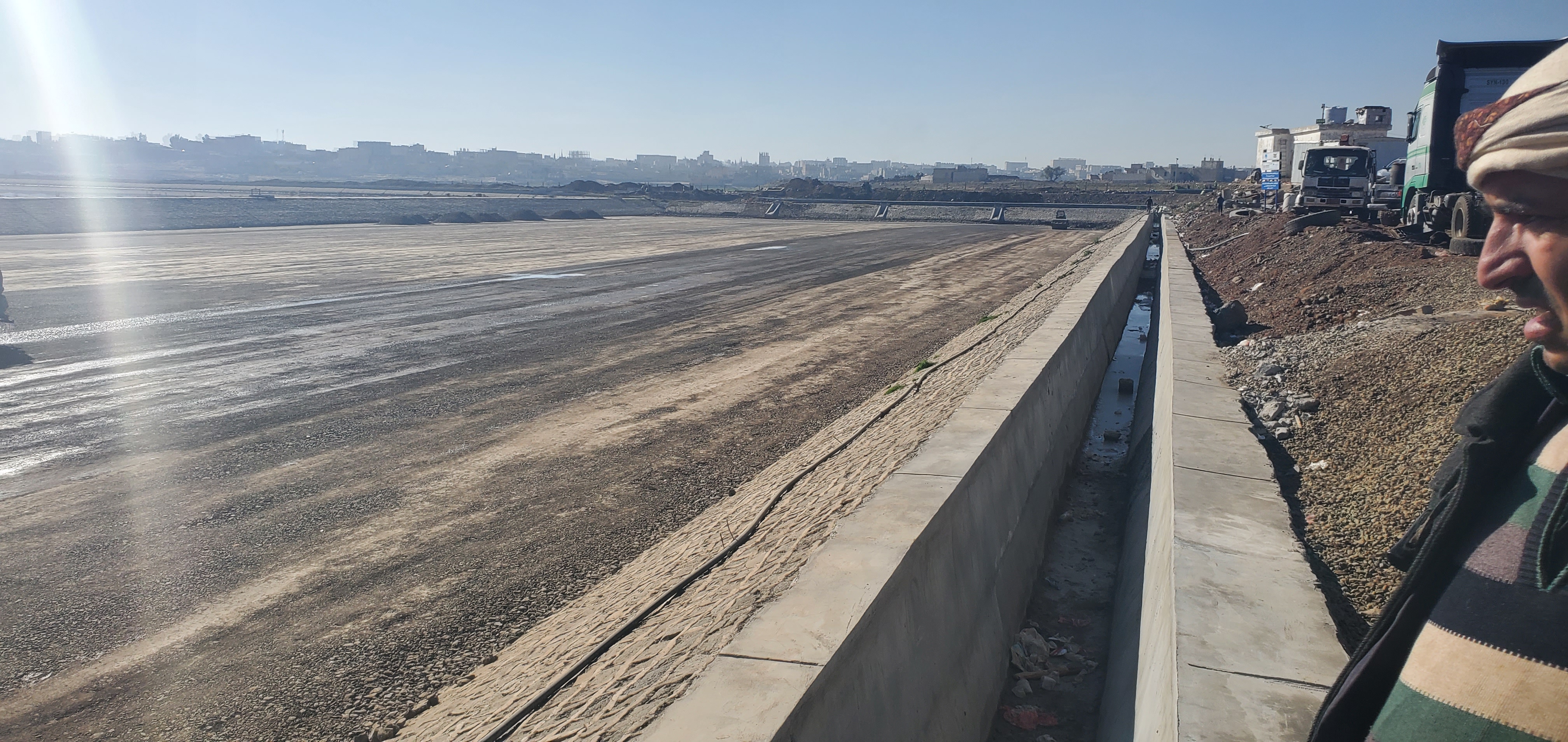
Cleaning the bottom and walls of Basin No. 6, excavating the side concrete channel, and adjusting levels for channel rehabilitation.
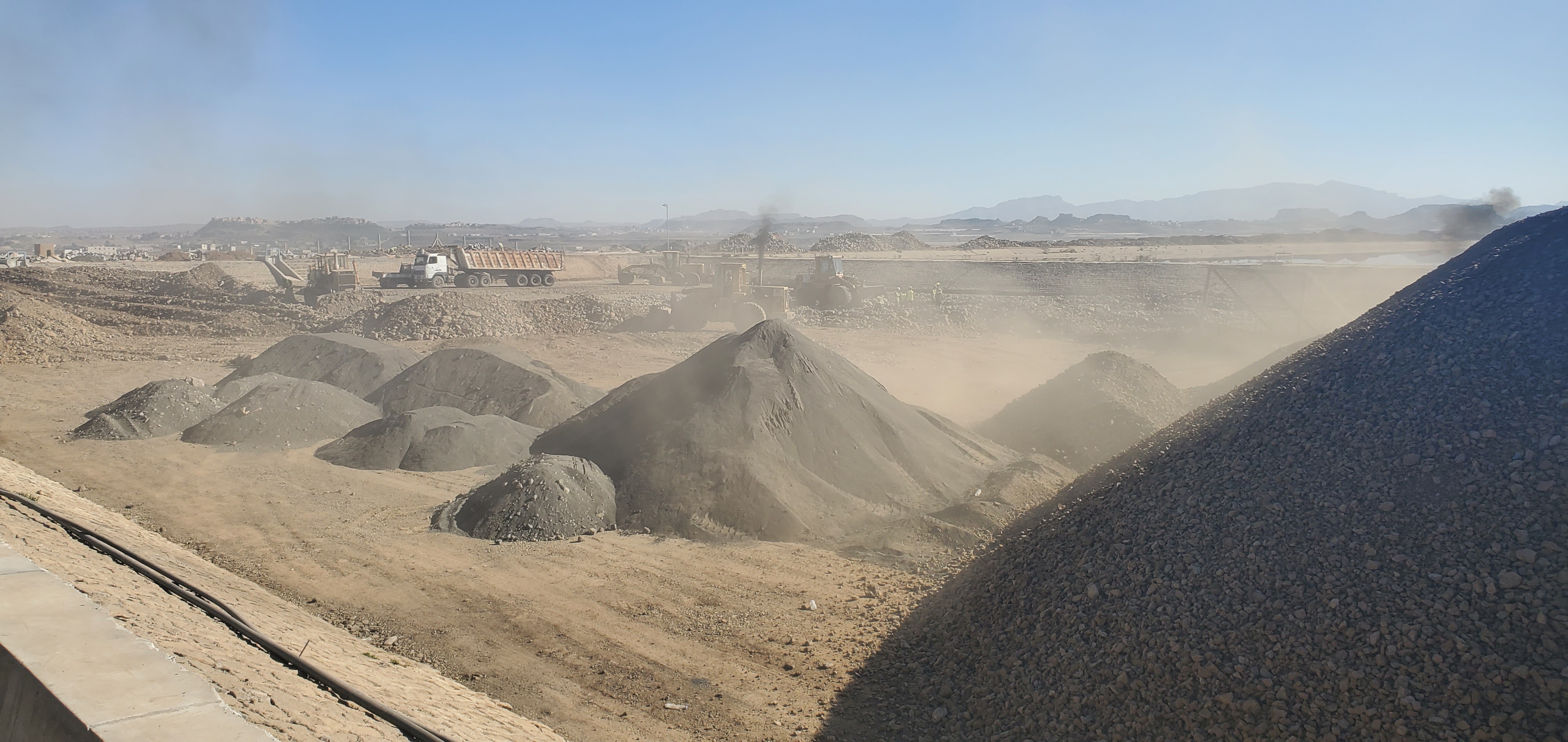
Using bulldozers and trucks to remove approximately 23,520 m³ of sludge and solid clay waste inside the station perimeter.
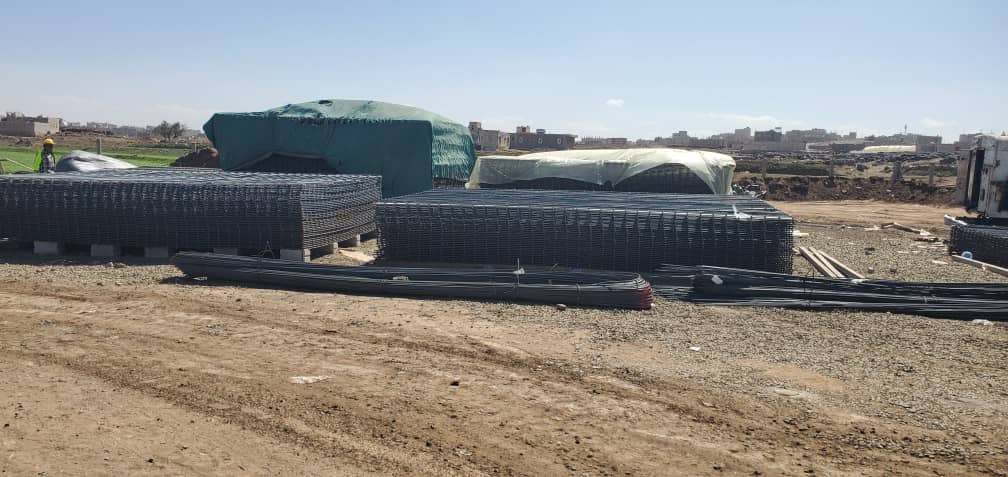
Organising and storing rebar and PVC waterproofing membrane rolls, covering them to protect from direct weather exposure before installation.
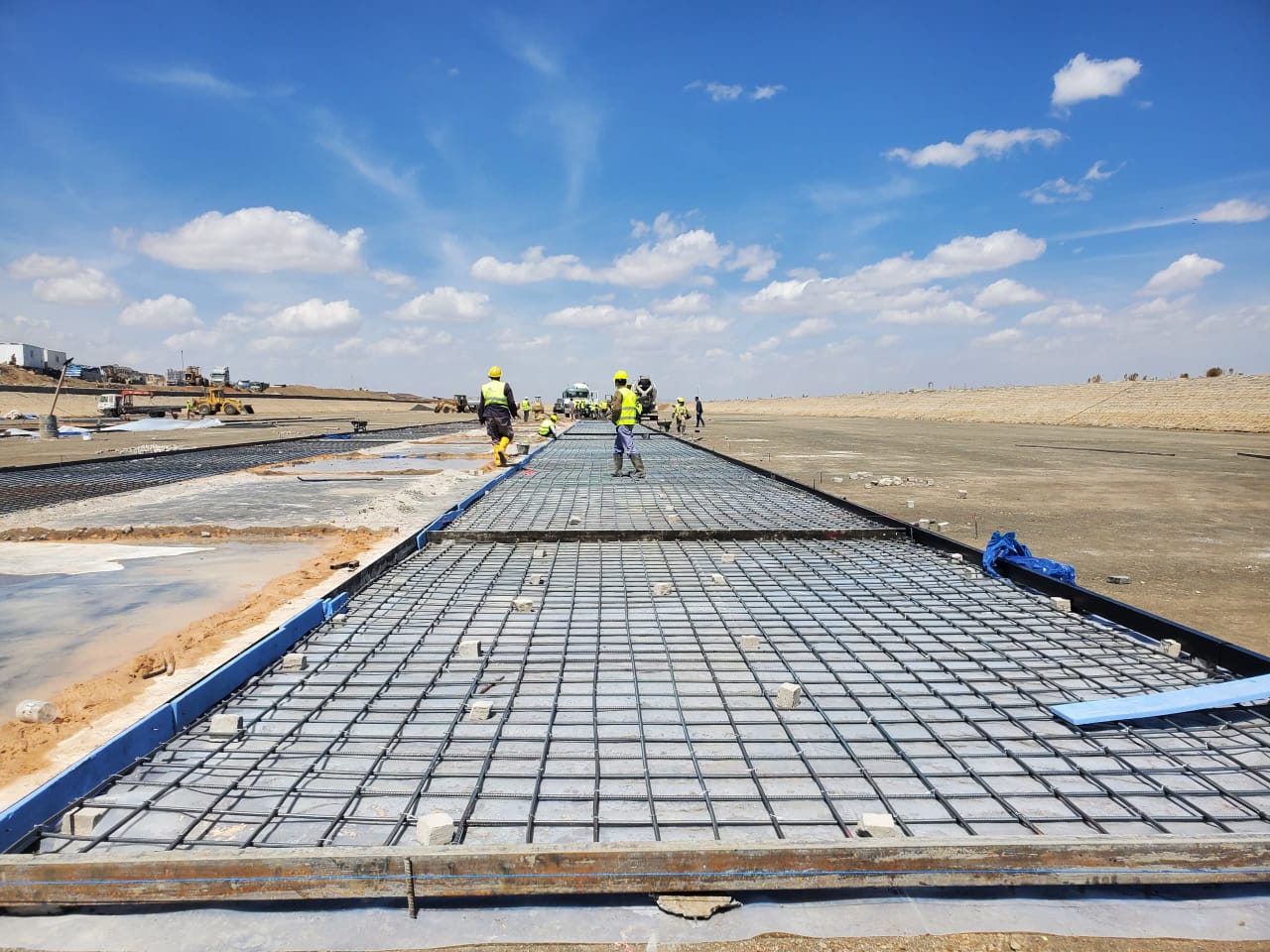
Laying the PVC waterproofing membrane (500-micron thickness) on the basin floor and installing rebar mesh (6Ø12 mm/m) in preparation for concrete slab pouring.
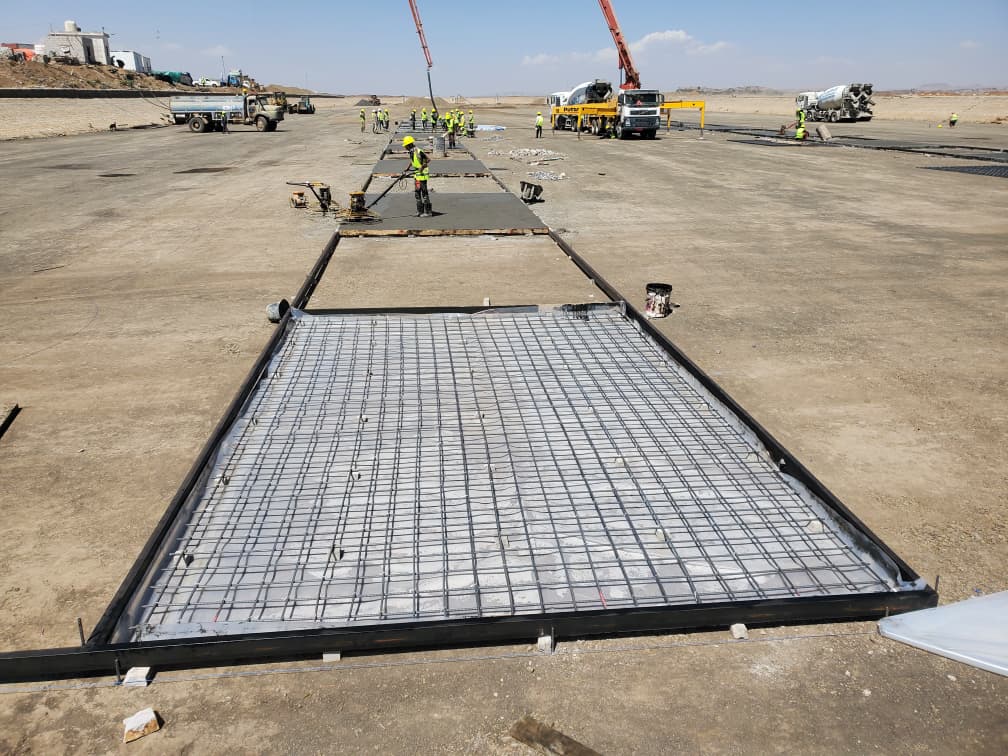
Preparing side formwork for construction joints to ensure the integrity of reinforced concrete slabs and prevent cracks caused by temperature variations.
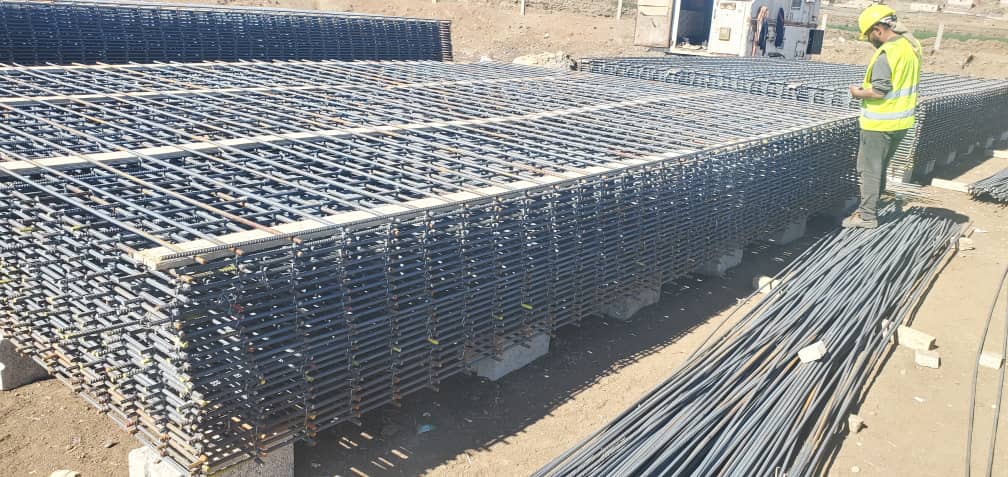
Direct engineering verification of chair height and spacing accuracy of rebar mesh to ensure uniform concrete thickness for the basin floor.
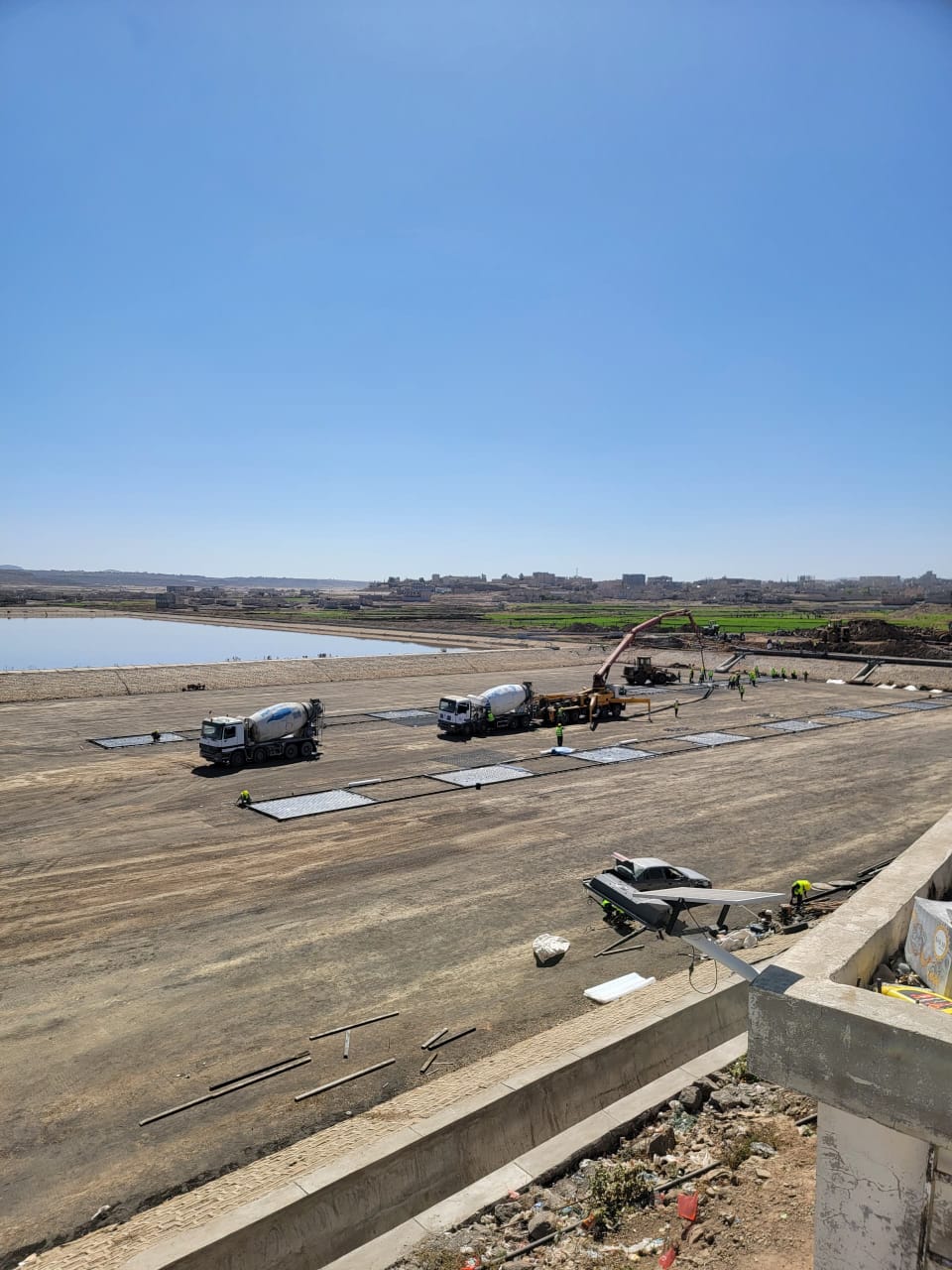
Flow of mobile concrete mixers and operation of the concrete pump during slab pouring for the basin with a total area of 31,500 m².
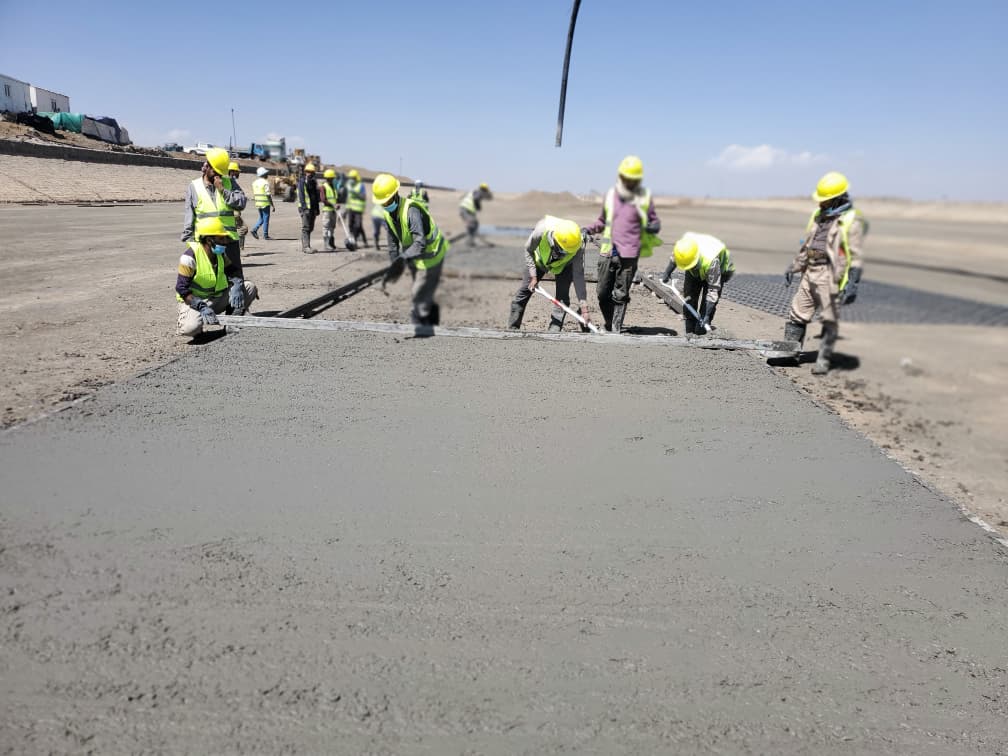
Rwad Construction team levels the fresh concrete surface and compacts it using mechanical vibrators to remove air bubbles and ensure density.
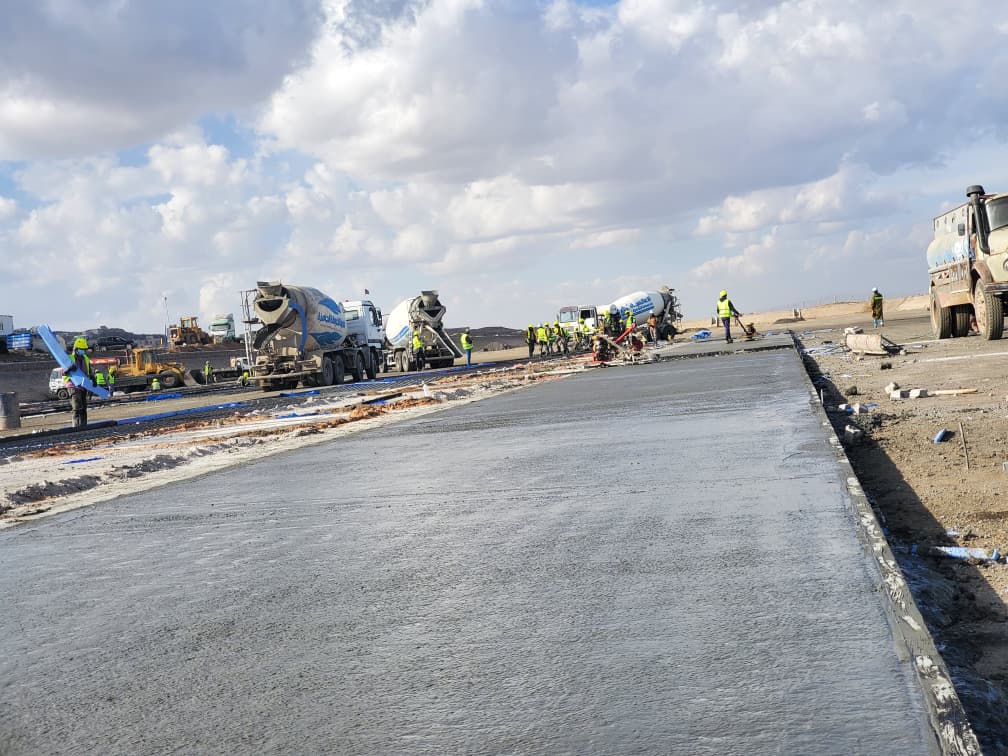
An integrated line of ready-mix concrete trucks at the worksite ensures continuous pouring of structural slabs and avoids cold joints.
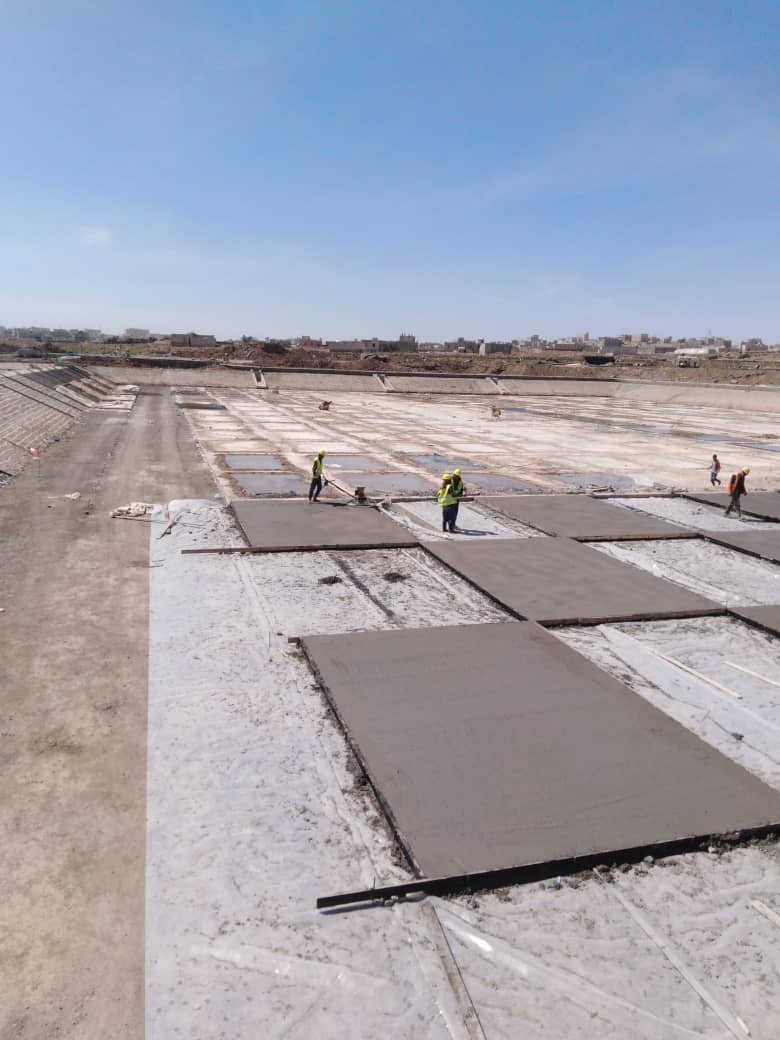
Application of the globally recommended engineering method of pouring concrete slabs in an alternating staggered pattern to facilitate free concrete shrinkage and prevent random hairline cracks in expansive areas.
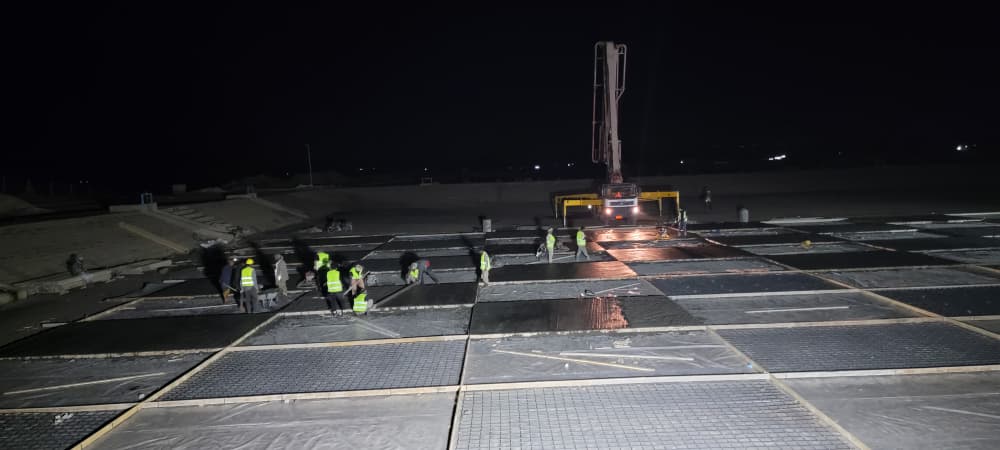
Overcoming daytime drought and rapid water evaporation challenges through continuous night pouring to ensure proper concrete curing and achieve compressive strength.
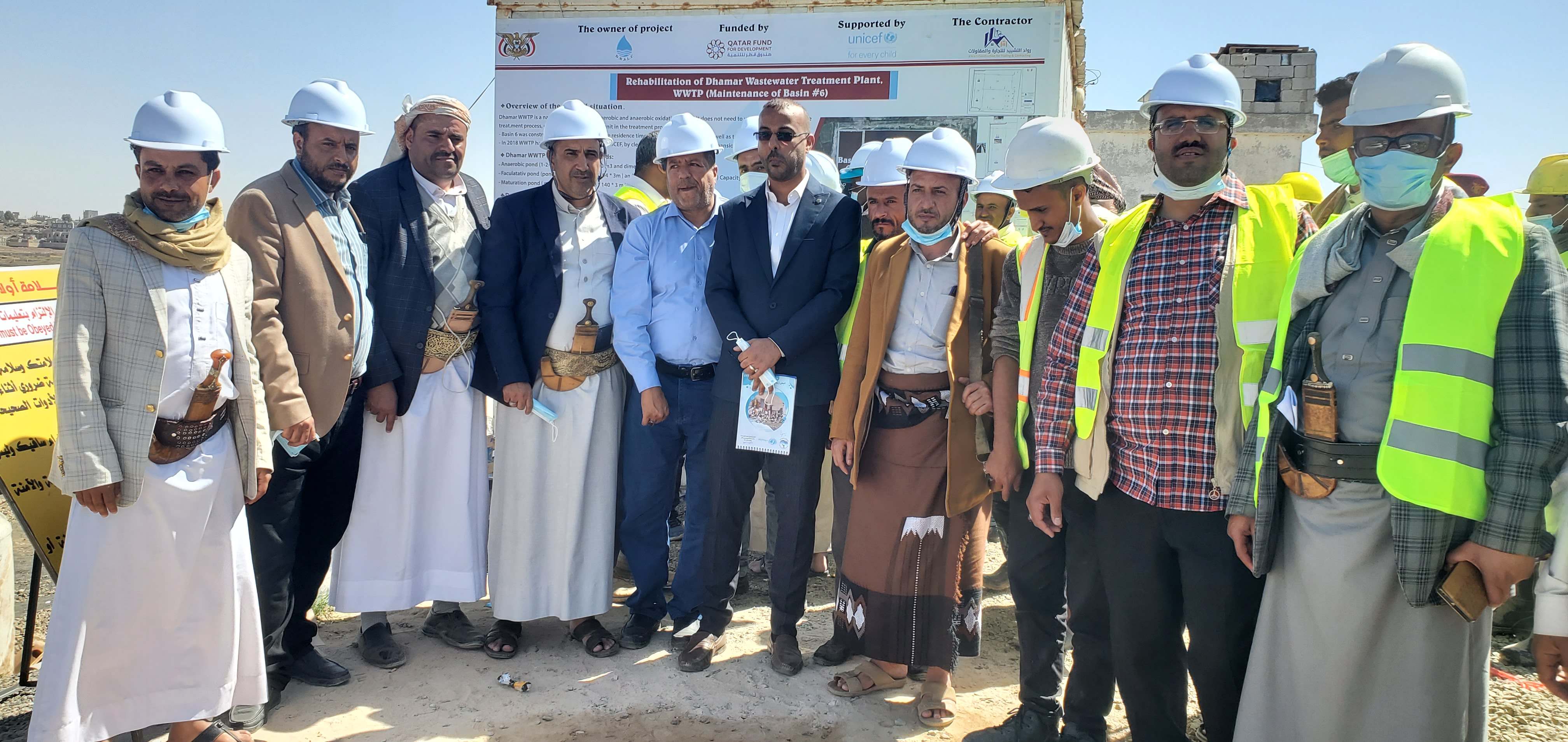
A commemorative photo of the UNICEF delegation, the Local Water and Sanitation Corporation of Dhamar, and the management of Rwad Construction in front of the project launch details board.
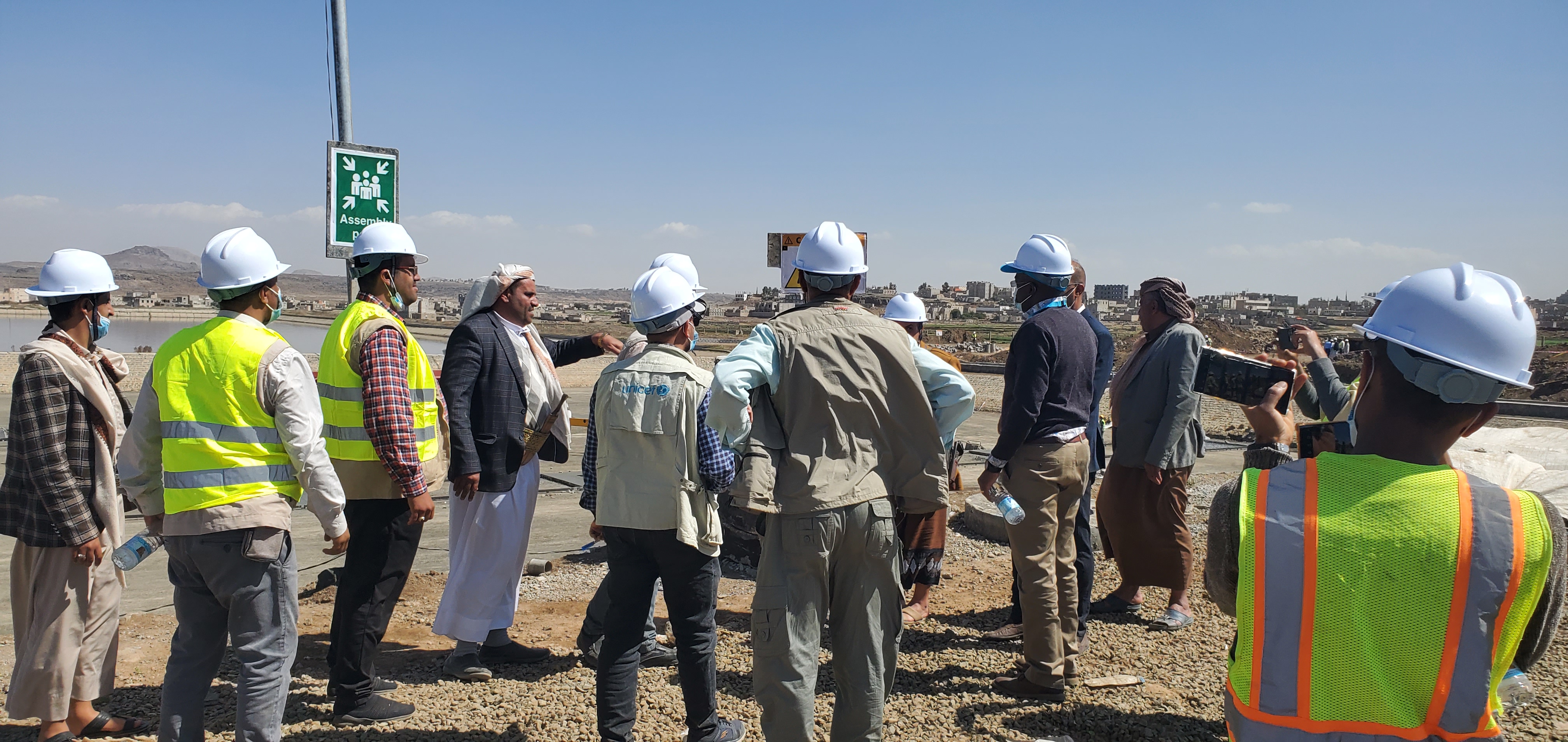
Members of the joint technical delegation inspecting the main control gates, completed chambers, connecting channels, and the walls of Basin No. 6.
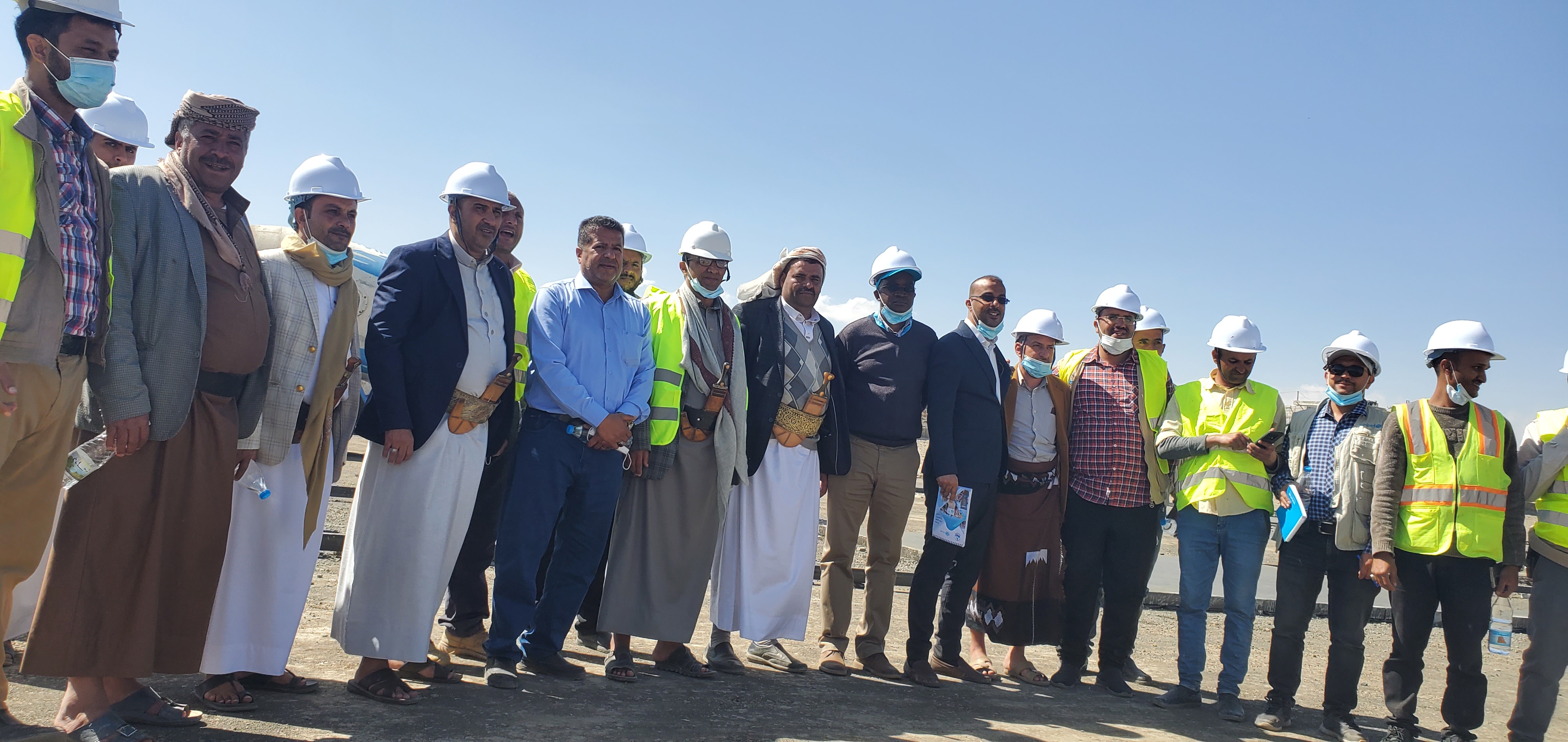
Group photo of engineers and workers of Rwad Construction on the floor of Basin No. 6 after successful concrete pouring.
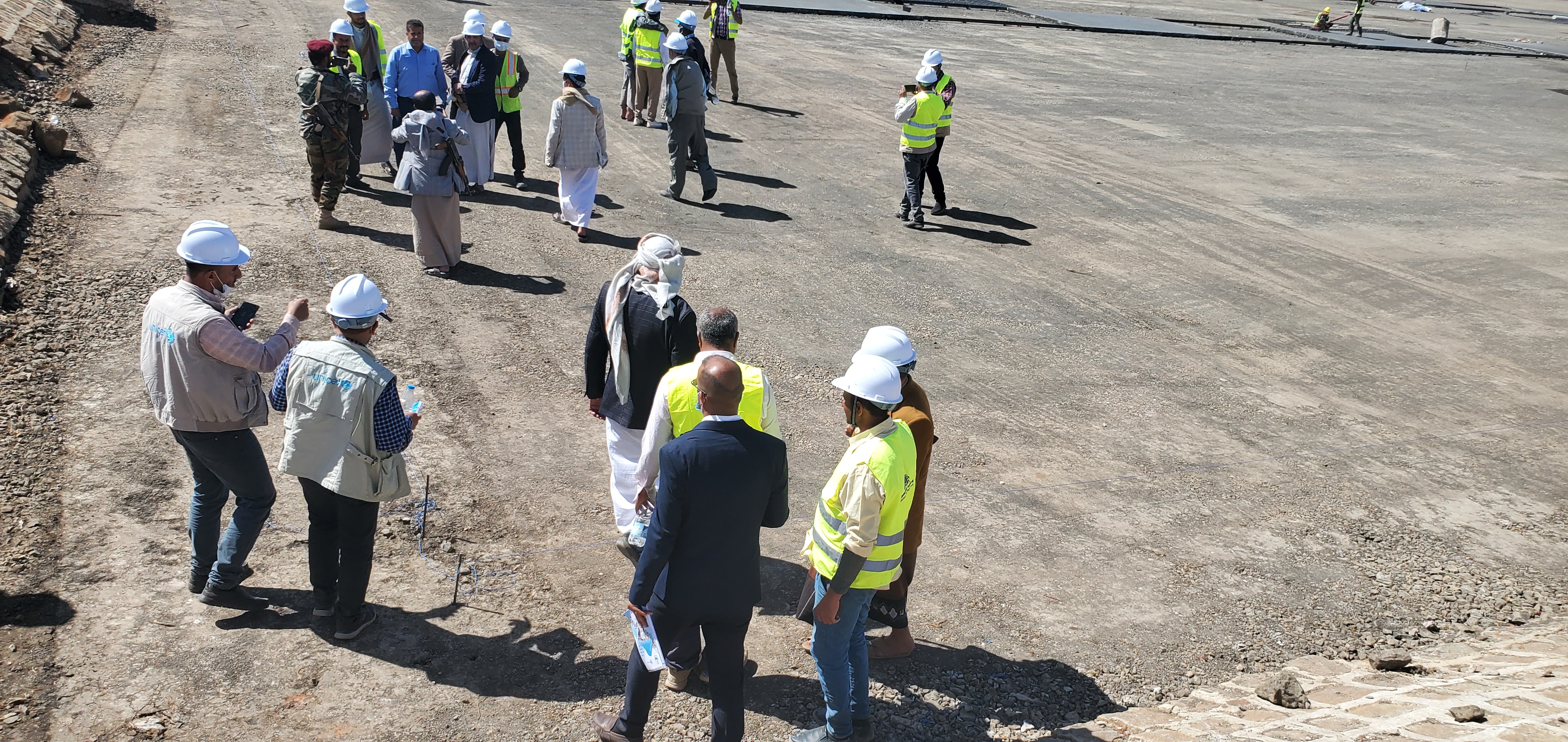
The full technical group of site engineers, OHS officers, and concrete specialists of Rwad Construction posing in front of Basin No. 6 during final floor smoothing operations.
6. Results & Environmental Impact (Before vs. After)
The structural overhaul of Basin No. 6 completely changed the plant's performance metrics. Below is a comparative look at laboratory values and operational conditions before and after Rwad Construction's intervention:
| Key Indicator | Pre-Project (Aug 2023) | Post-Project (May 2024) | National Standard limit |
|---|---|---|---|
| Overall treatment efficiency | Dropped to 60% | > 90% (Full operational state) | 100% design efficiency |
| Effluent BOD | 364 mg/L (unacceptable levels) | ≤ 150 mg/L (59% reduction) | ≤ 50 mg/L (ideal targets) |
| Groundwater contamination risk | Critically High (direct seepage) | Zero seepage (PVC lining) | Complete insulation required |
| Vector & Odor issues | Pervasive breeding of flies/mosquitoes | Significantly minimized | Safe local biosphere |
Effluent BOD Reduction (mg/L):
7. Lessons Learned & Recommendations
Executing this complex sanitary infrastructure project yielded valuable field insights for future development initiatives in Yemen:
Key Field Insights:
- Pre-Approval of Specialized Materials: Early approval of imported PVC liners and concrete admixtures avoids bottleneck delays in Yemen's supply chains.
- Pre-Bid Site Walks: Critical for assessing actual wet sludge volumes to prevent project cost overruns.
- HSE Protection: Upfront investment in heavy rubber boots, respirators, and regular health checks guarantees workforce productivity.
Future Recommendations:
- Early Commitment to Environmental and Social Management Plans (ESMP): The project demonstrated that systematic application of ESMP requirements throughout all execution phases contributes to ensuring site worker safety, enhances the confidence of donors and beneficiaries, and reduces operational risks during implementation.
- Dedicated HSE Staffing: A full-time site safety engineer is essential to manage nearby farming issues and keep a clean grievance log.
- Sufficient Schedule Buffers: Wet sludge drying (50-60 days) is weather-dependent and requires realistic scheduling margins.
Project Conclusion & Handover
This milestone project showcases Rwad Construction's ability to complete complex civil and sanitary works in challenging conditions. The facility is fully operational according to required specifications.
Company Director: Qaid Nasser
Mobile Contact: +967777222195
Office Manager: Ahmed AL-Etwani

(Provisional Acceptance Certificate Issued on Time)